Tiny Home Crawl Space Vapor Barrier Install in Pensacola
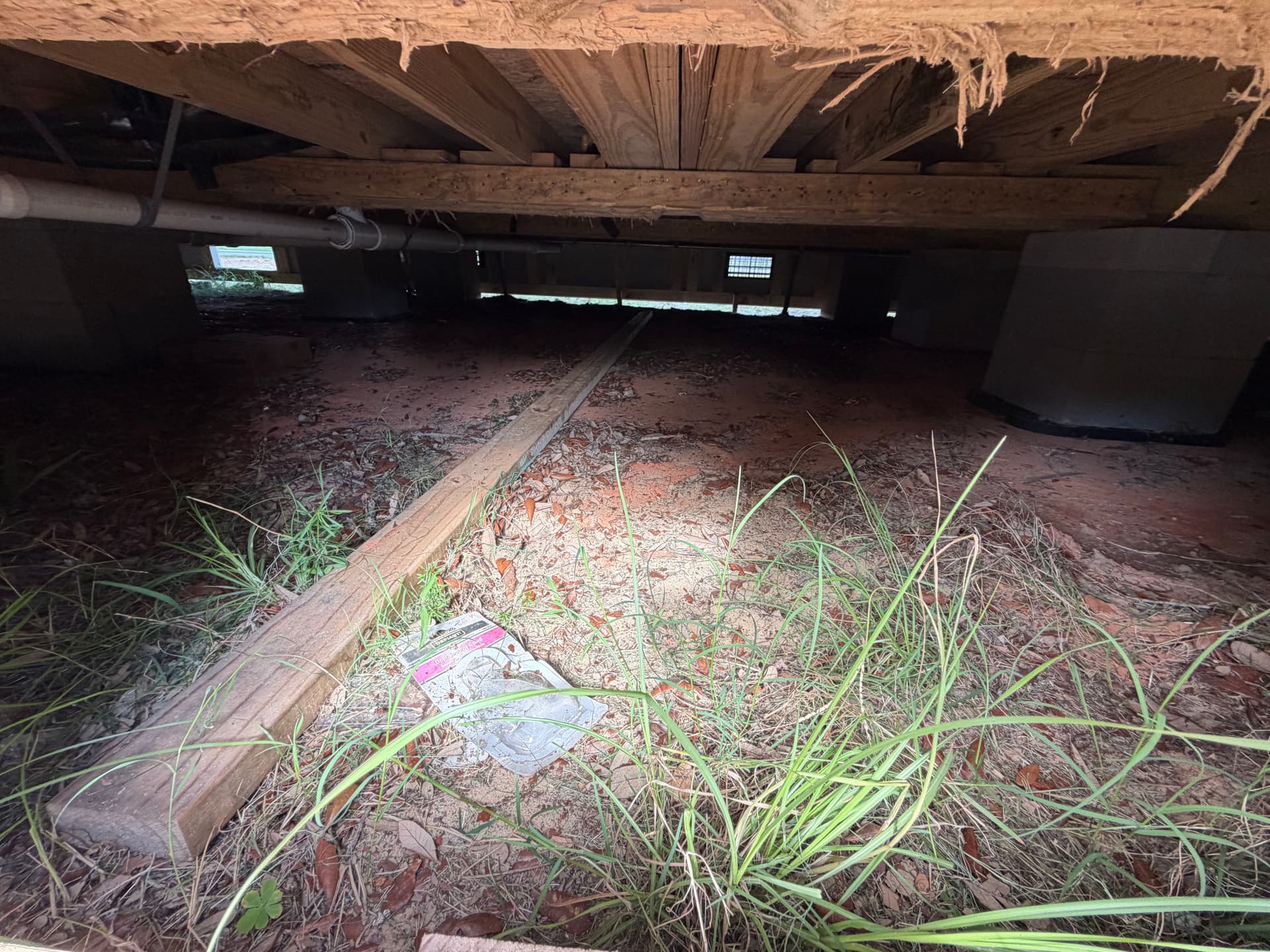
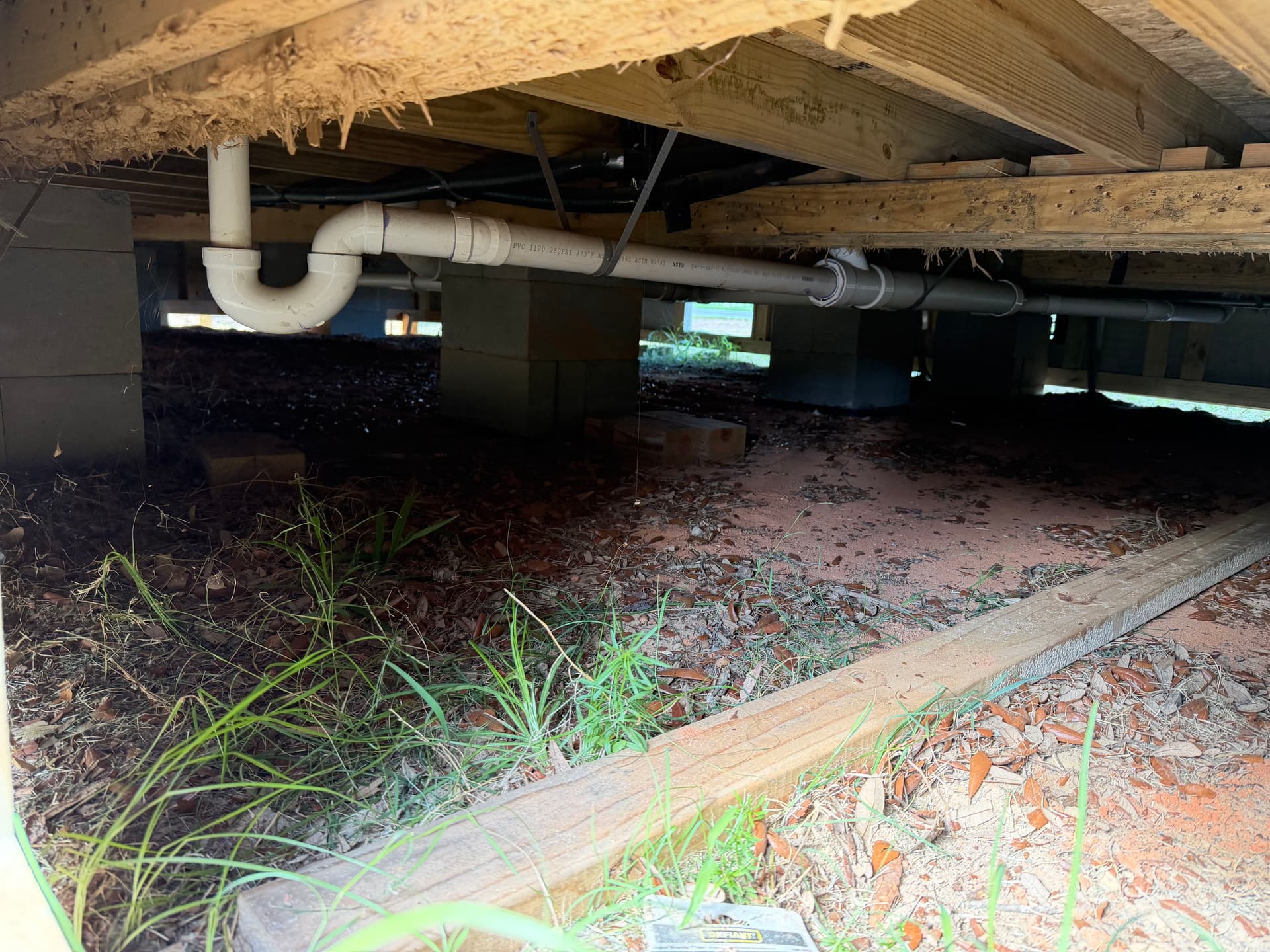
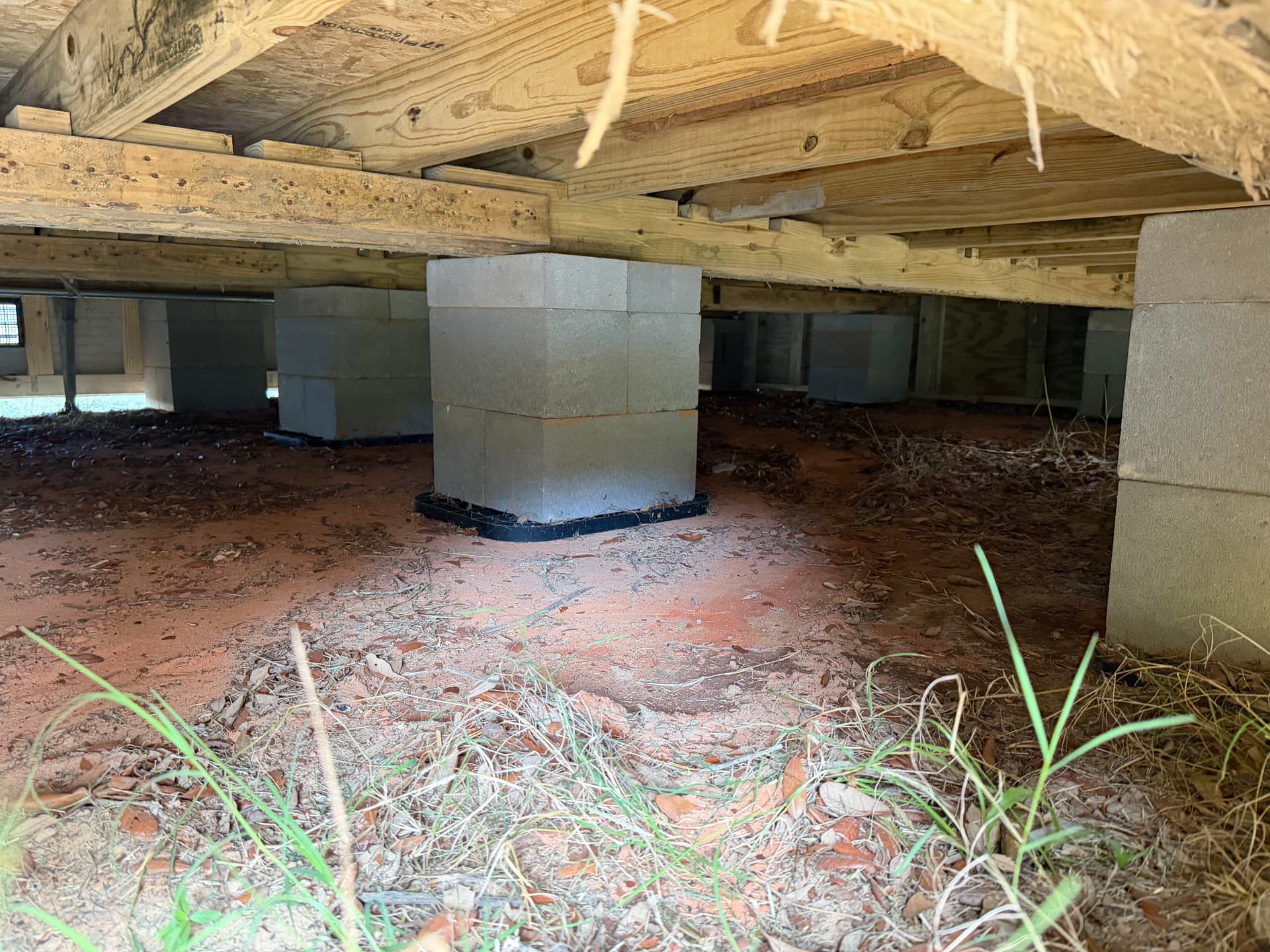
Small homes still have crawl spaces - and those crawl spaces still need protection. We got called out to a tiny home in Pensacola where the ground underneath was completely exposed. Bare dirt, weeds growing up through the floor system, dead leaves piled against the framing. That kind of environment just sits there and pushes moisture straight up into the structure above it.
Here's the thing about ground moisture in a crawl space - you don't always notice it until the damage is already done. Soft spots in your floor, musty smells creeping into your living space, wood framing that starts to show wear earlier than it should. All of that can trace back to an unprotected crawl space floor. And for a tiny home, where every square foot matters, that's a problem you really can't afford to ignore.
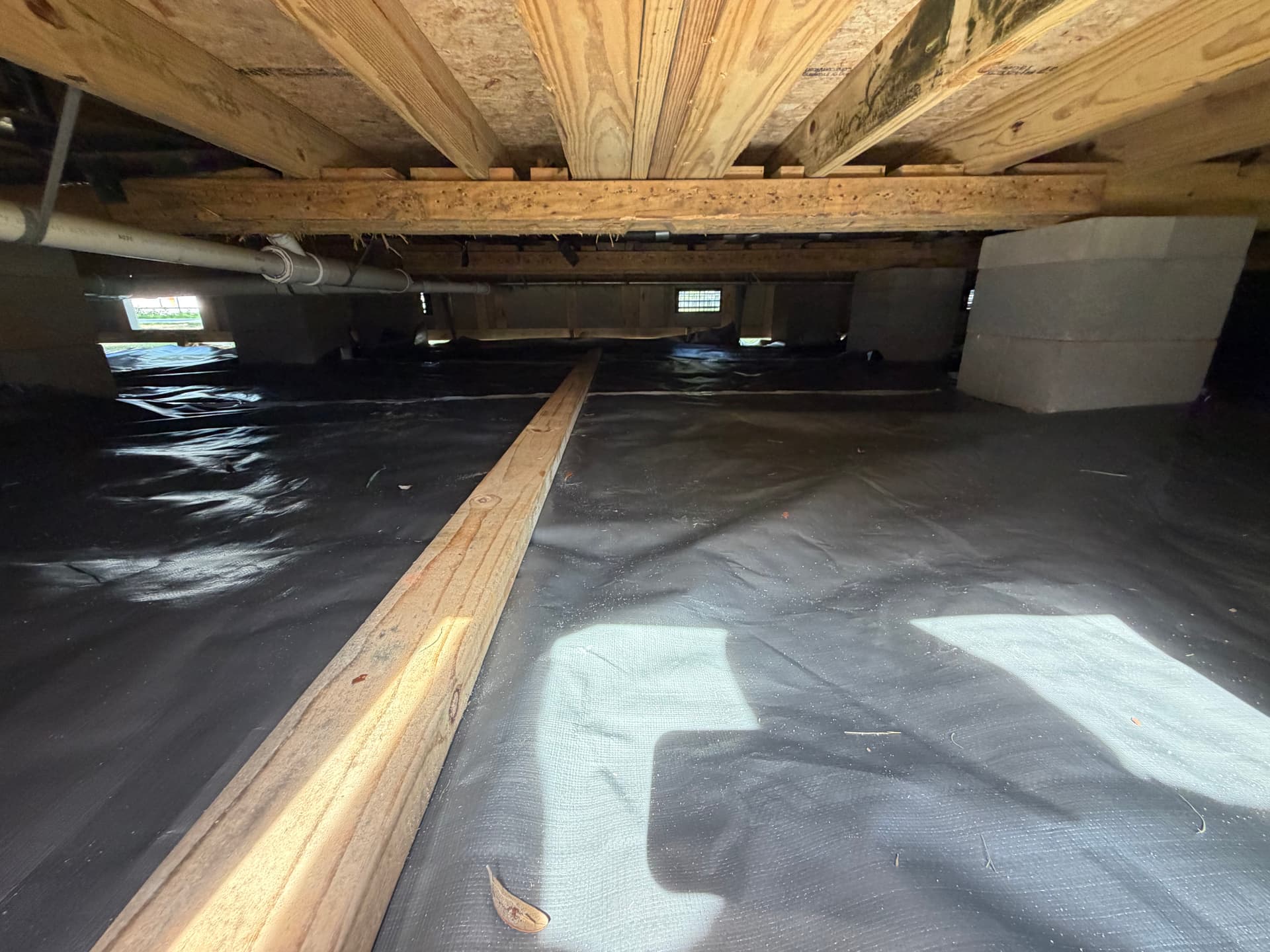
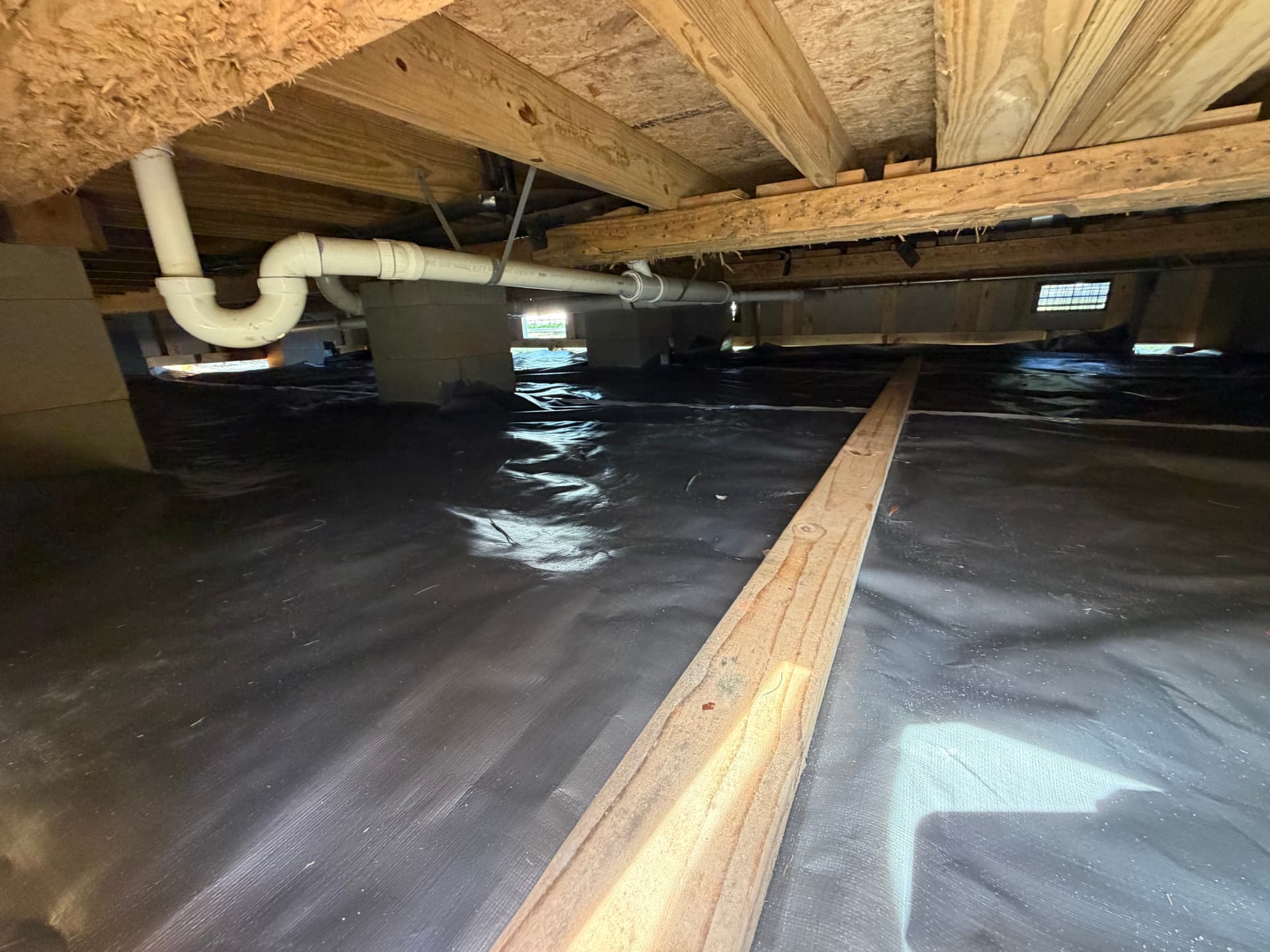
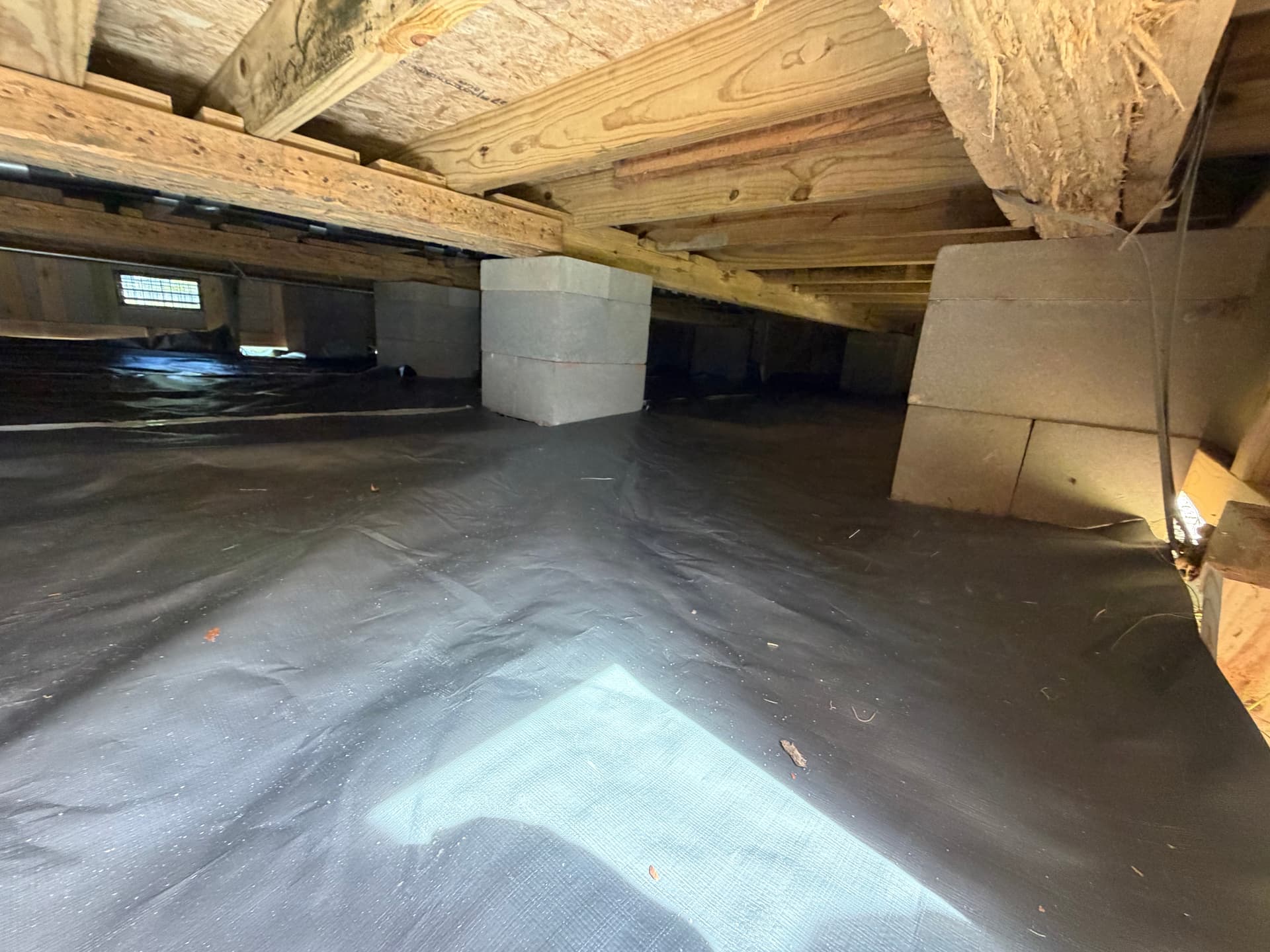
We went in and installed a 12 mil vapor barrier across the entire crawl space floor. The 12 mil rating matters - it's a heavy-duty liner that holds up over time and actually does the job of blocking ground moisture from rising into your floor system. Thinner plastic just doesn't cut it. We worked around the existing piers and plumbing to get solid, consistent coverage wall to wall.
The difference was immediate. What had been an open, exposed dirt floor with weeds and debris became a clean, covered crawl space with a continuous black liner running the full length. That liner is now doing the work of keeping ground moisture from ever reaching the wood above it. For the homeowner, that's real protection - not just cosmetically, but structurally.
Vapor barrier installation is one of those things that pays for itself. It's not flashy work, but it's foundational. If you've got a crawl space with bare dirt underneath your home - tiny home, traditional home, doesn't matter - it's worth getting it looked at before moisture makes the decision for you.