Standing Water in the Crawl Space? We Get In There and Handle It
Standing water under a home isn't a "wait and see" situation. Left alone, it leads to mold, wood rot, compromised insulation, and eventually structural damage. We've seen it happen faster than most homeowners expect - and by the time they notice something's wrong inside the house, the crawl space has already taken a beating.
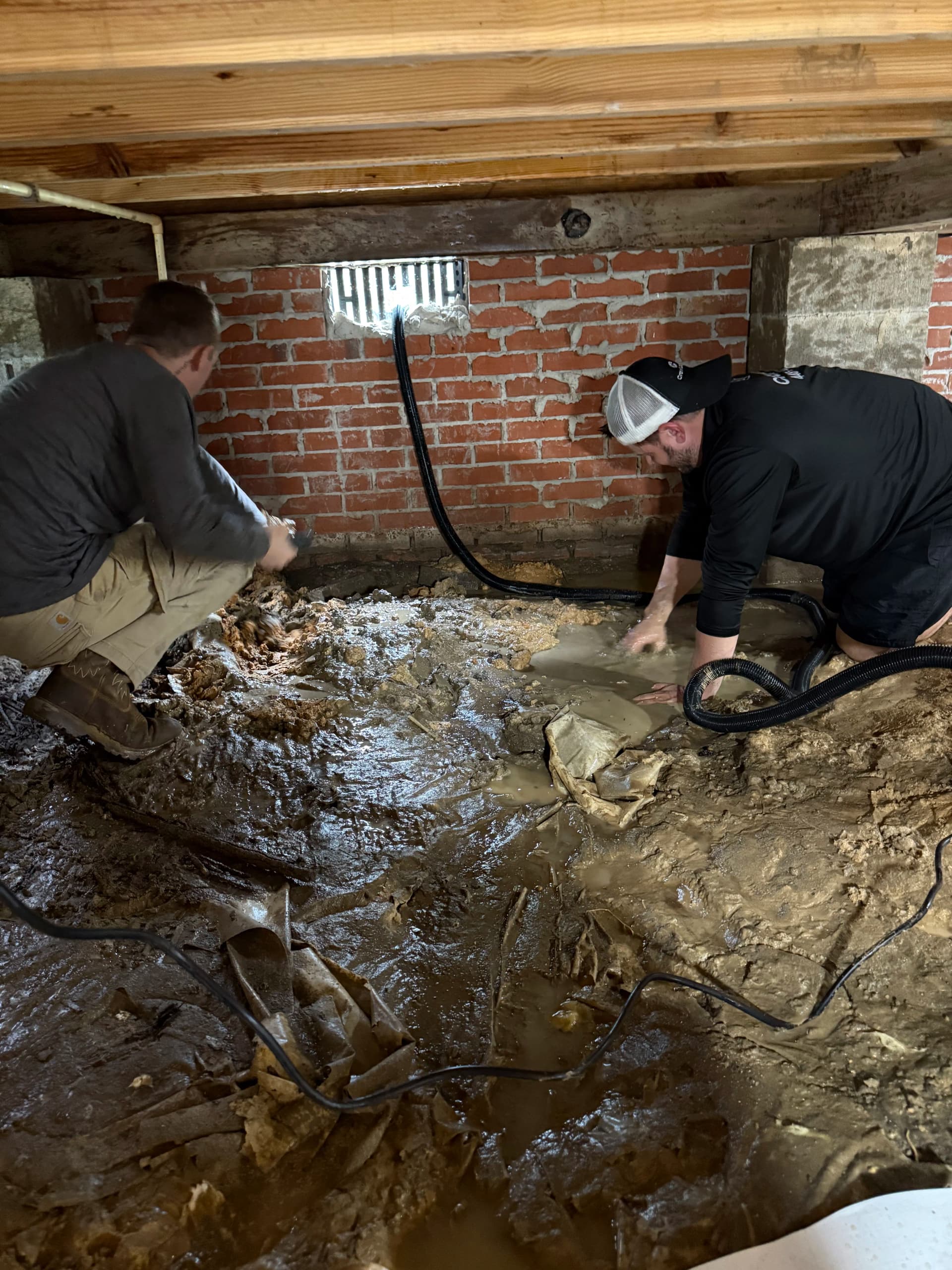
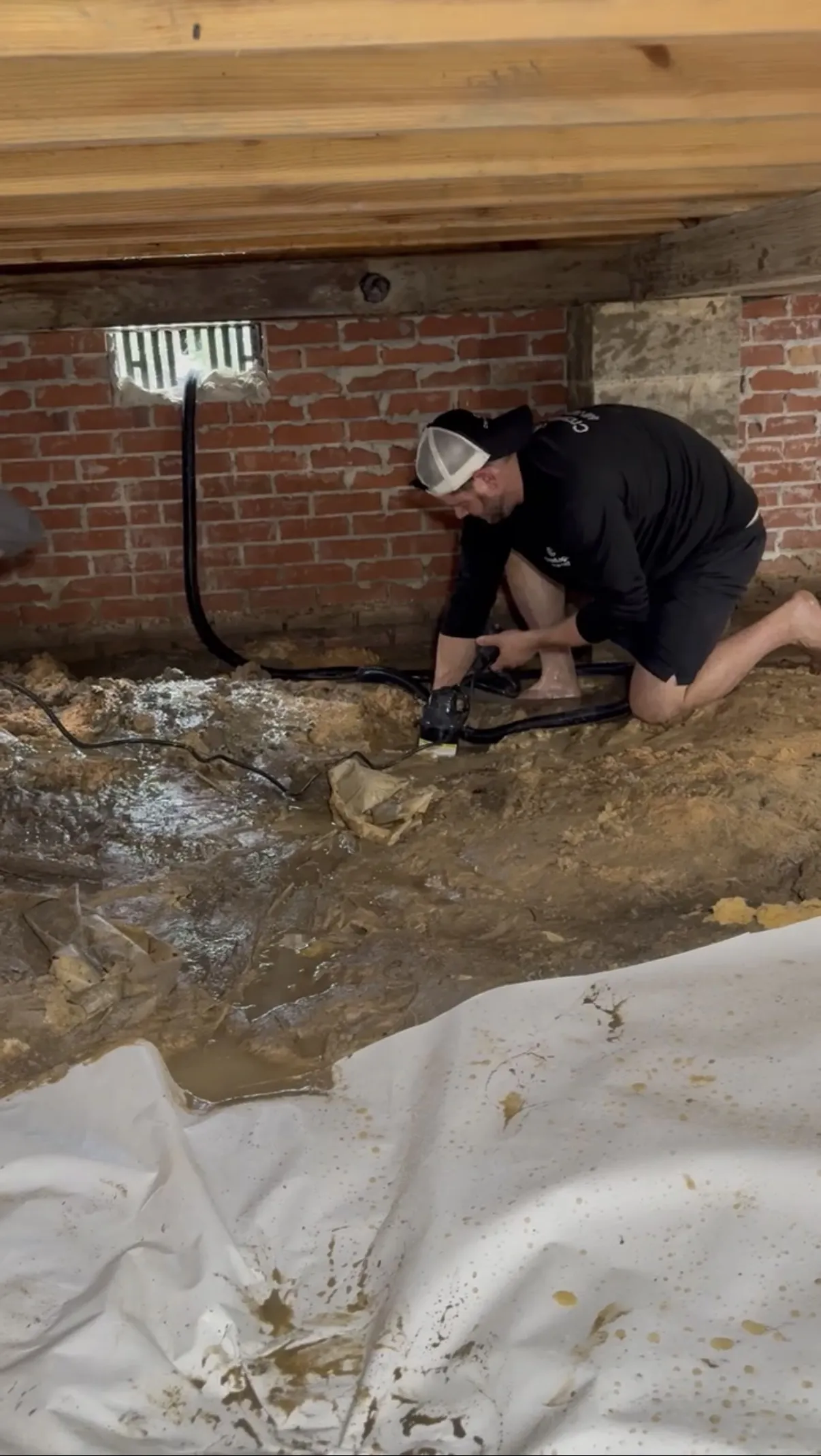
This one was a muddy, saturated mess. The homeowner is handling the exterior French drain themselves, which is a solid long-term fix. But before we could even think about encapsulation, we had to get in there and pull that standing water out first. No shortcuts, no skipping steps.
That's exactly what we did. Our crew got down in the mud and worked the pump lines through the space to extract the water and get the ground dried out enough to move forward. It's not glamorous work. It's wet, tight, and uncomfortable. But it's the only way to do the job right - encapsulating over standing water would just trap the problem instead of solving it.
Once the space is dried out and prepped, encapsulation can actually do its job - sealing out moisture, protecting your floor joists and insulation, and keeping the air quality in your home from being dragged down by what's happening underneath it. Skipping the prep work is how you end up right back where you started.
If your crawl space stays damp, smells musty, or you've noticed soft spots in your floors or higher energy bills, moisture is likely the culprit. A wet crawl space doesn't fix itself - but with the right process, it absolutely can be brought under control.