Crawl Space Encapsulation Done Right in Moss Point
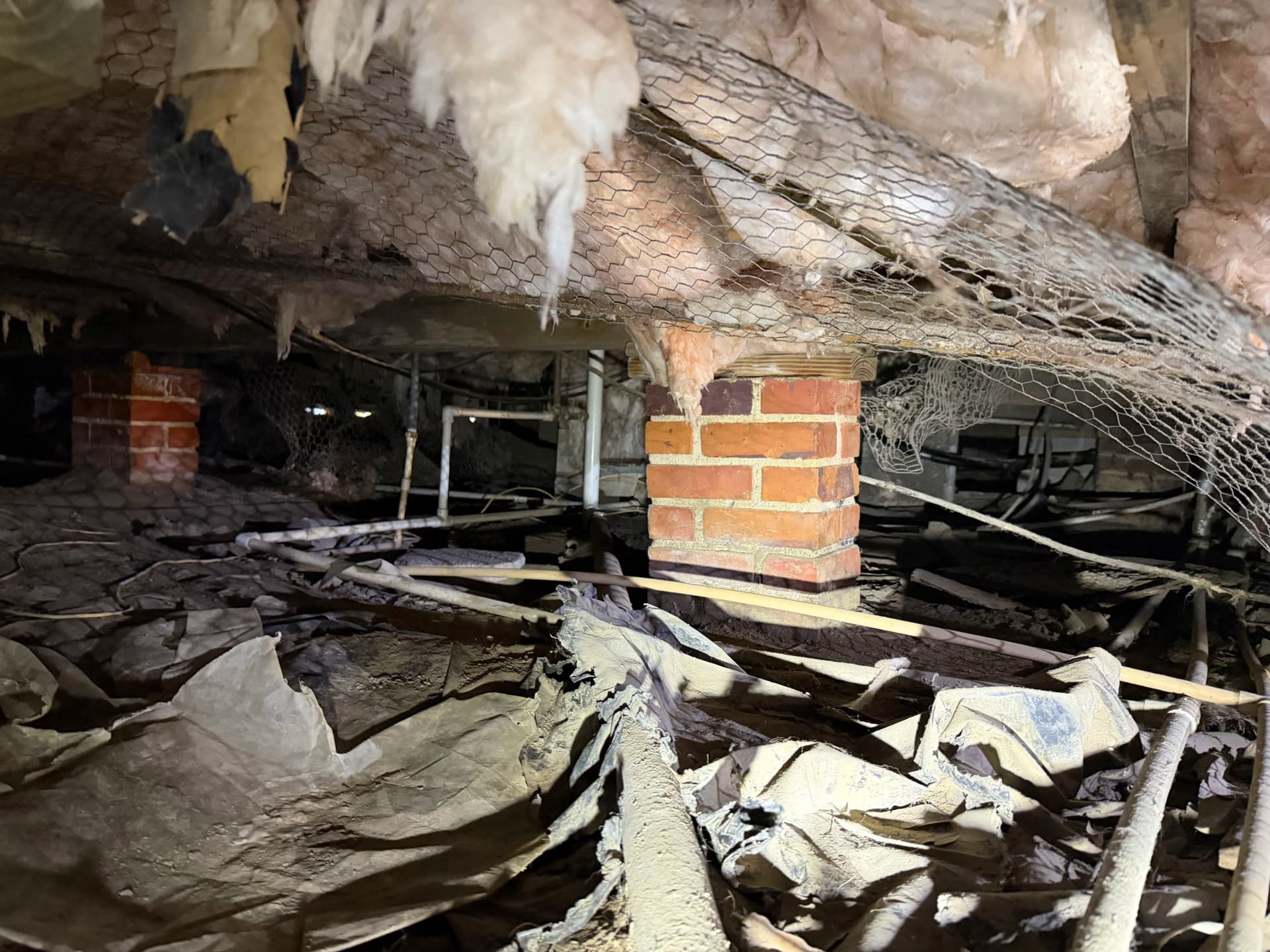
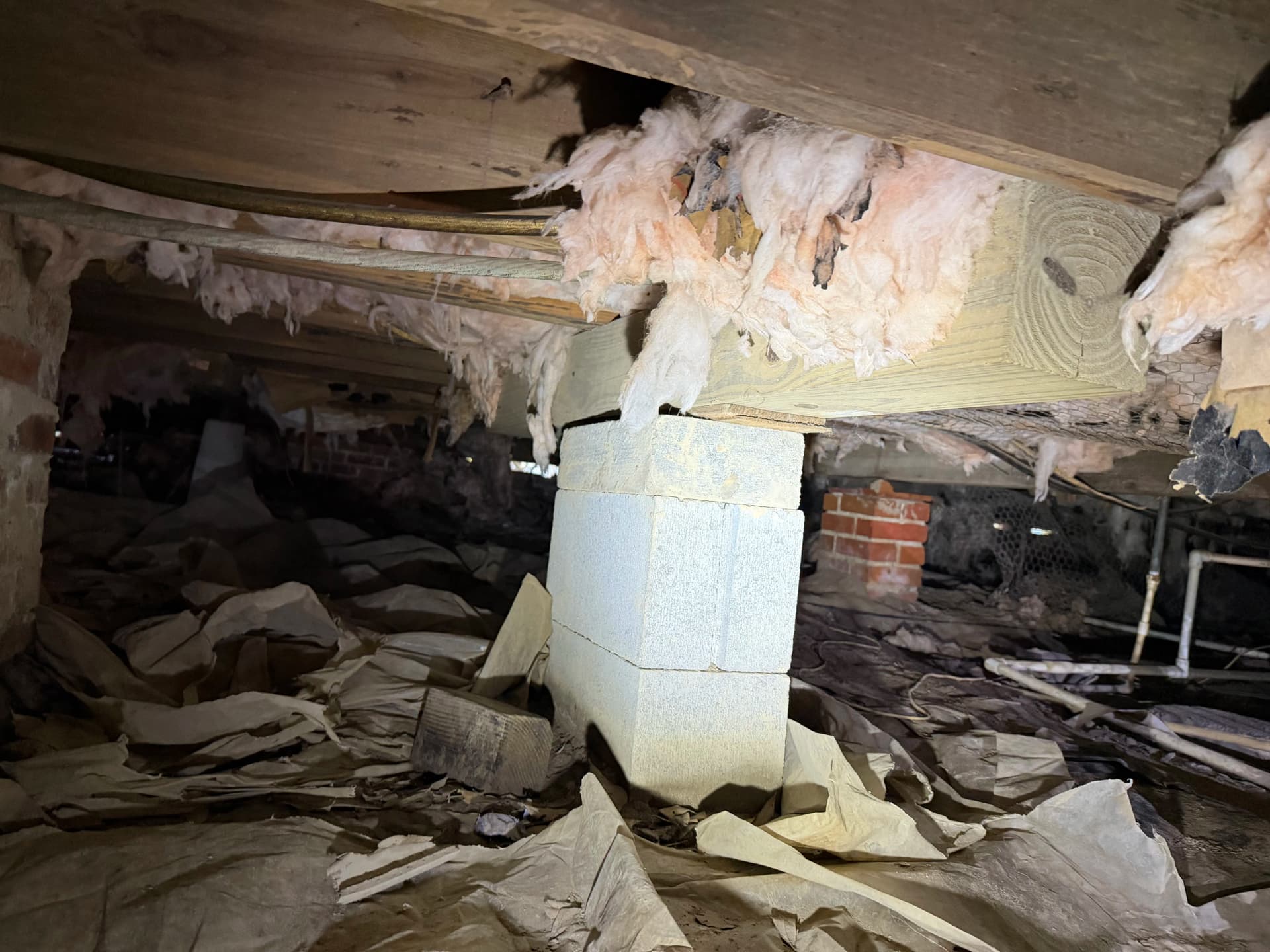
This one was a big job - and you can see exactly why. The before condition was rough. Shredded insulation hanging from the joists, torn-up old vapor barrier scattered all over the ground, debris everywhere, and a space that had clearly been left to deal with years of Gulf Coast humidity on its own. That kind of environment doesn't just sit there doing nothing. It's actively pulling moisture up into the floor system and the air inside your home.
Here's what most homeowners don't realize - what happens under your house has a direct impact on the air you breathe inside it. A crawl space that's open, damp, and full of deteriorating materials becomes a source of mold, musty odors, and poor indoor air quality. On the Gulf Coast, where humidity is already high, an unprotected crawl space makes everything worse.
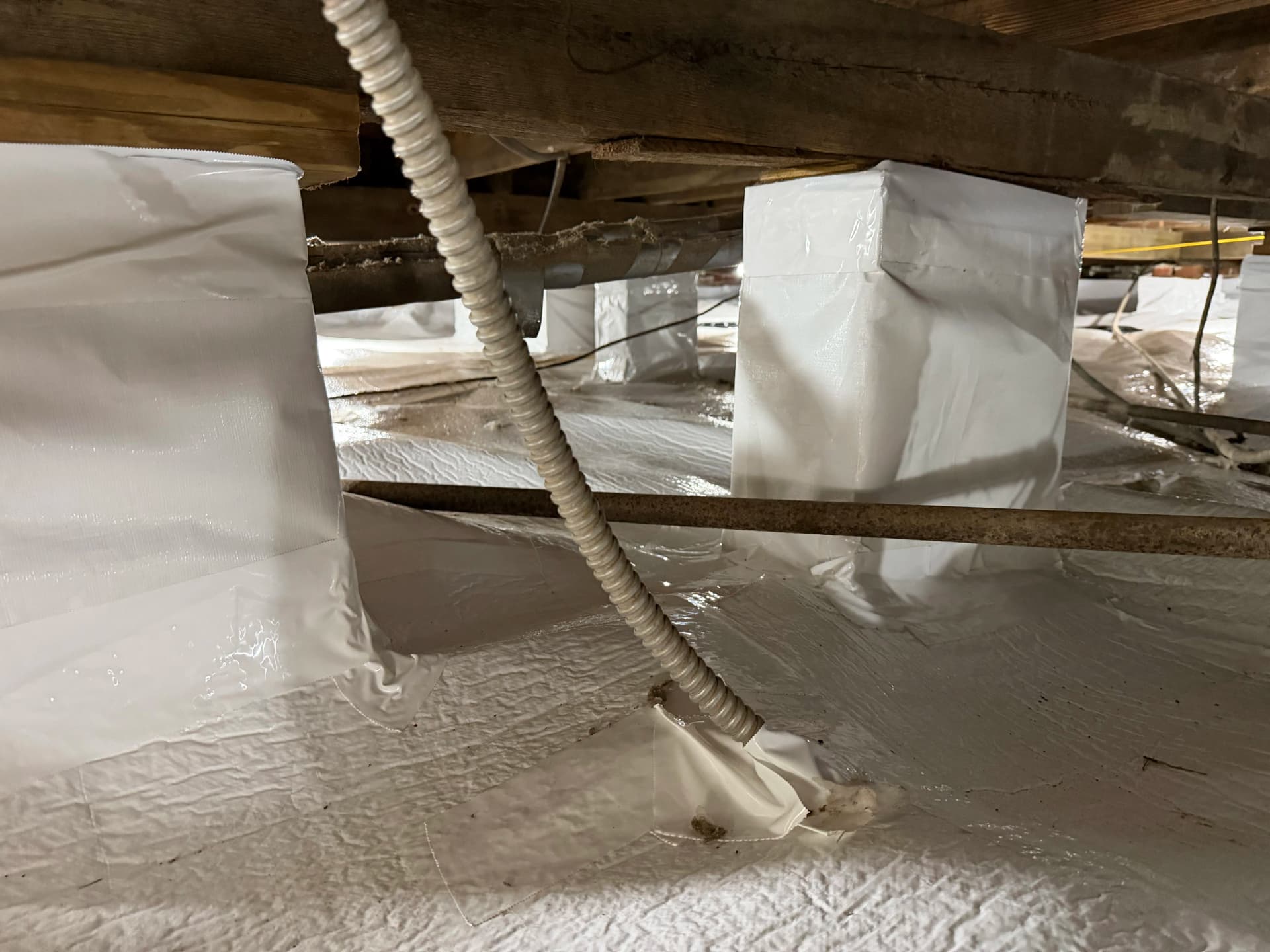
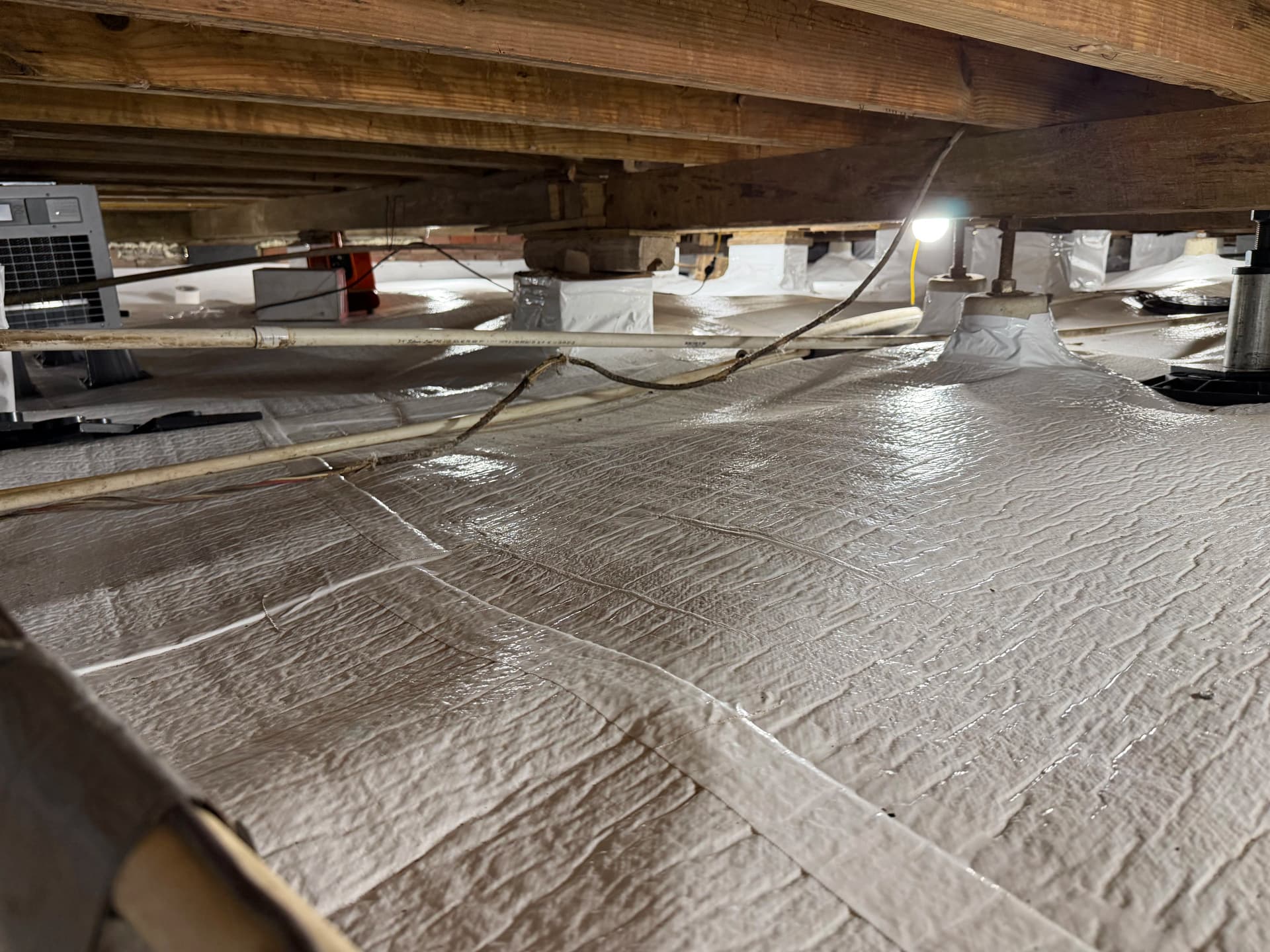
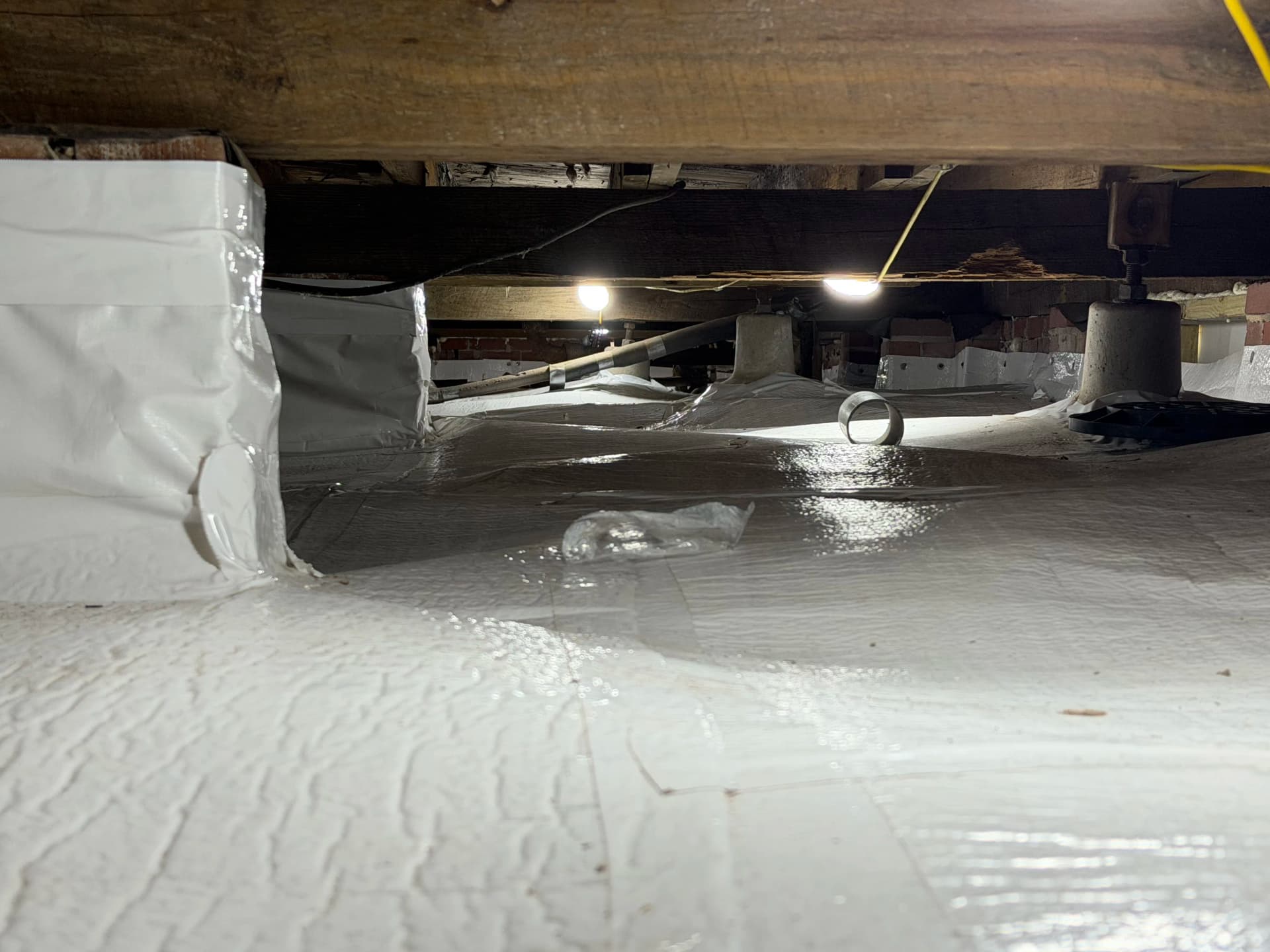
We cleared out all the old material and got to work on a full encapsulation. That means a heavy-duty vapor barrier installed across the entire ground surface, wrapped tight around every pier column in the space. The liner is sealed to create a continuous barrier between the soil and the structure above it - no gaps, no shortcuts. Every penetration gets addressed so moisture doesn't find a way back in through the edges.
The finished space is a completely different situation. Clean white liner stretched from wall to wall, piers wrapped and sealed, the whole thing tied together properly. That's what a real encapsulation looks like when it's done the right way. It protects the wood structure, discourages pests, and helps the home breathe better from the ground up.
If your crawl space looks anything like the before photos here - or even if you just haven't checked on it in a while - it's worth knowing what's actually going on down there. Problems underneath a home tend to get worse the longer they sit, and the Gulf Coast climate doesn't give them any time to dry out on their own.