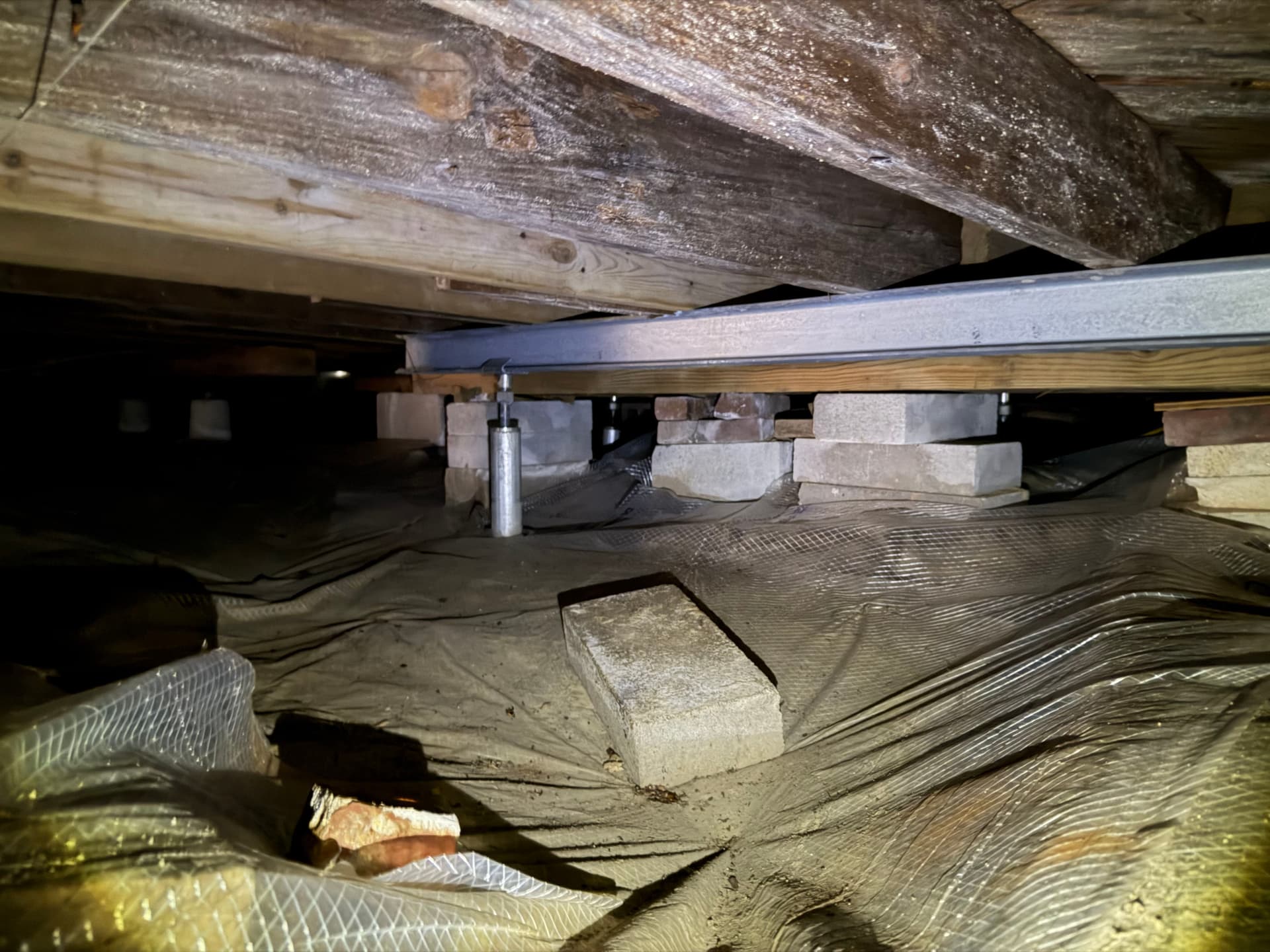
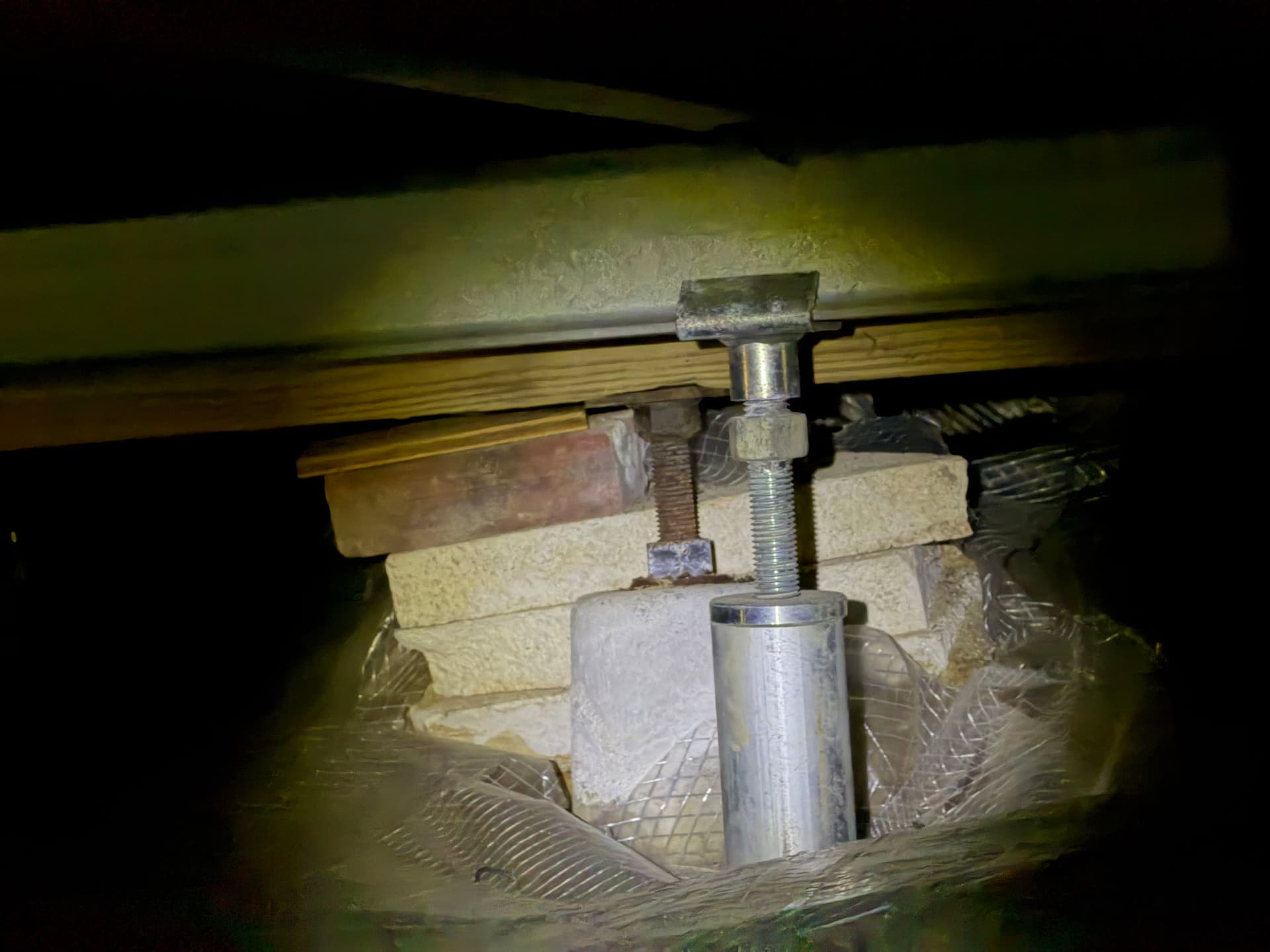
We got called out to a home in the East Hill area of Pensacola to take a look at a crawlspace that had already been encapsulated by another company. The homeowner was having issues and wanted a second opinion. What we found was one of the worst examples of a failed encapsulation we've seen.
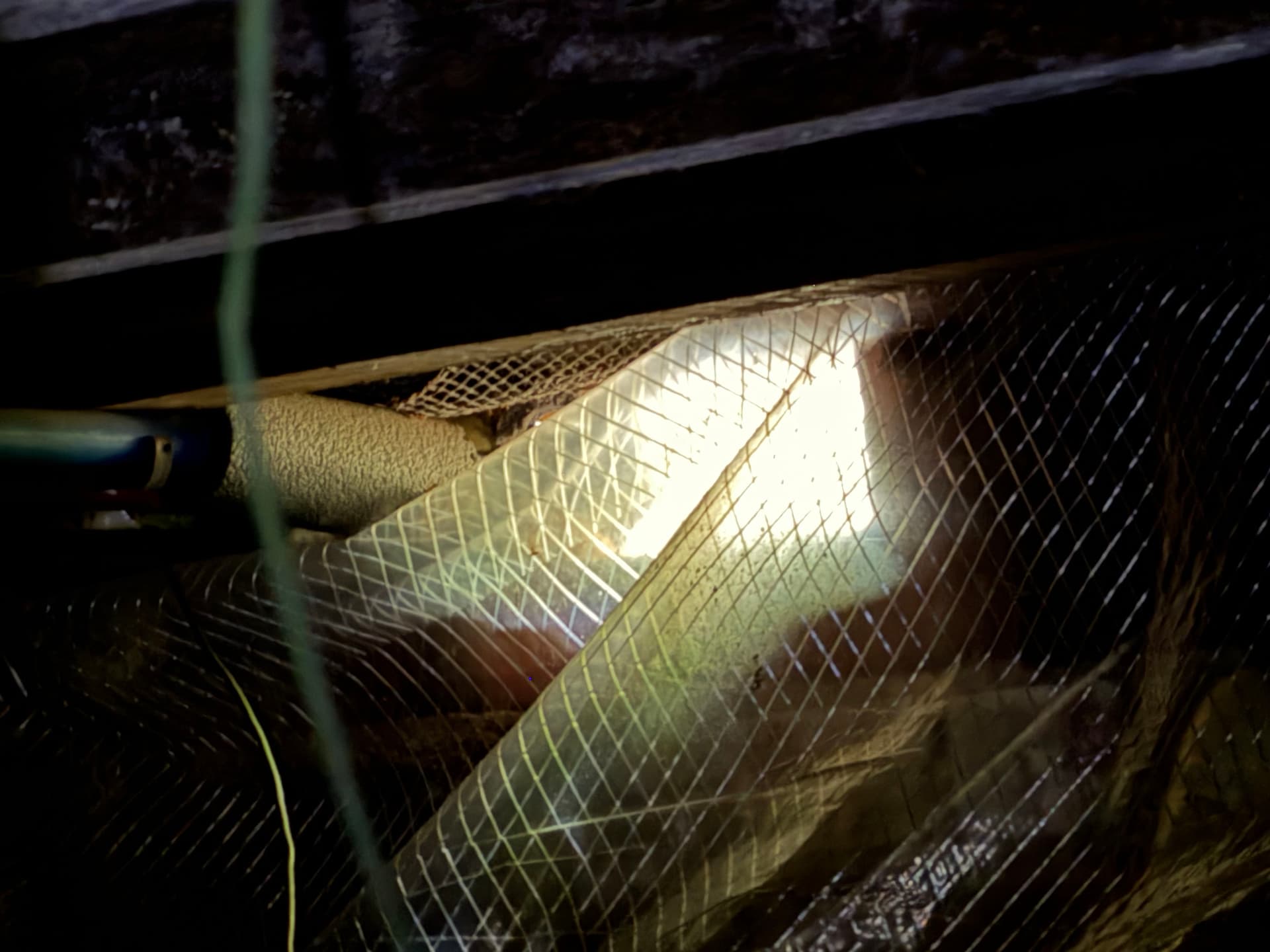
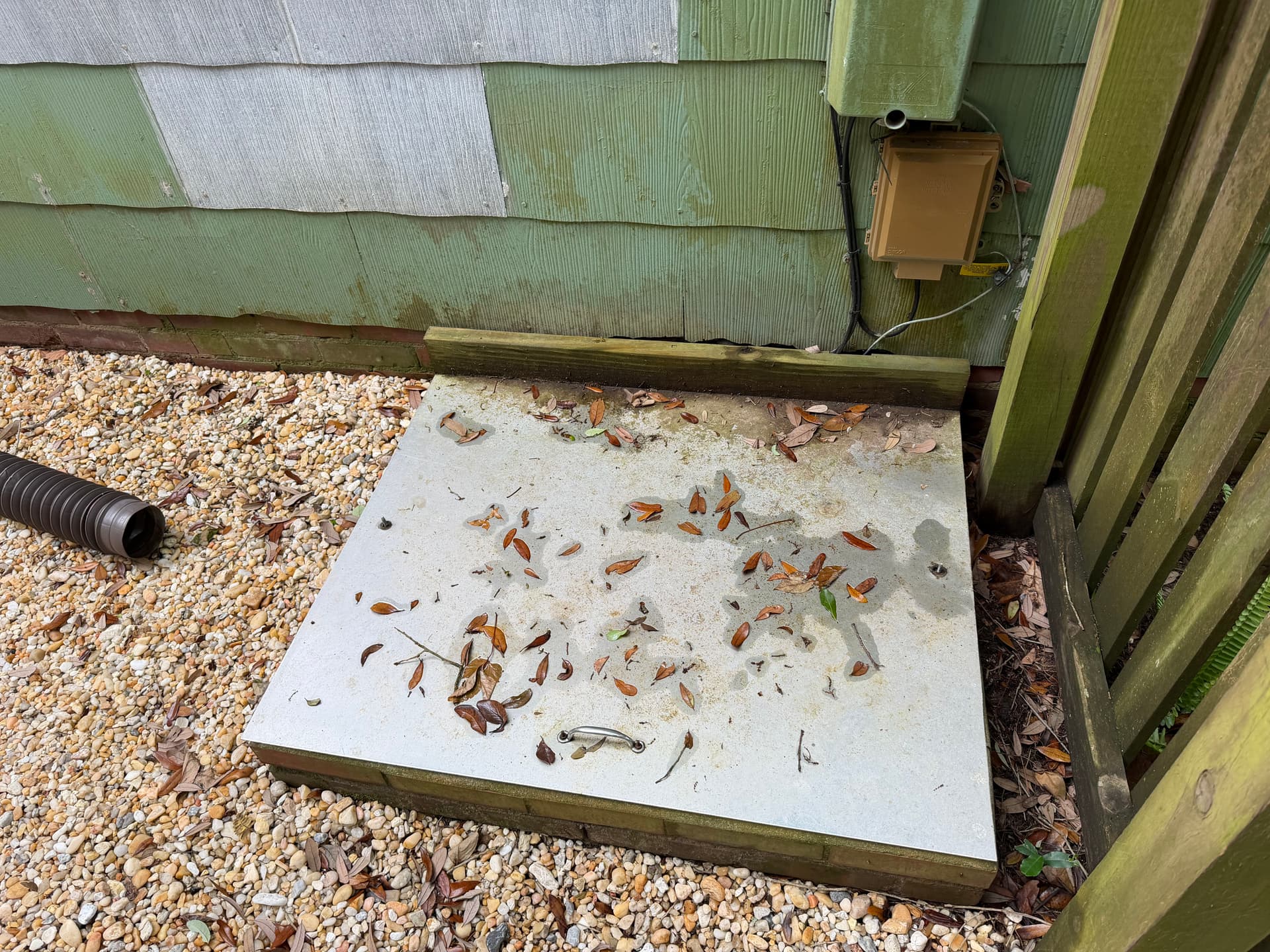
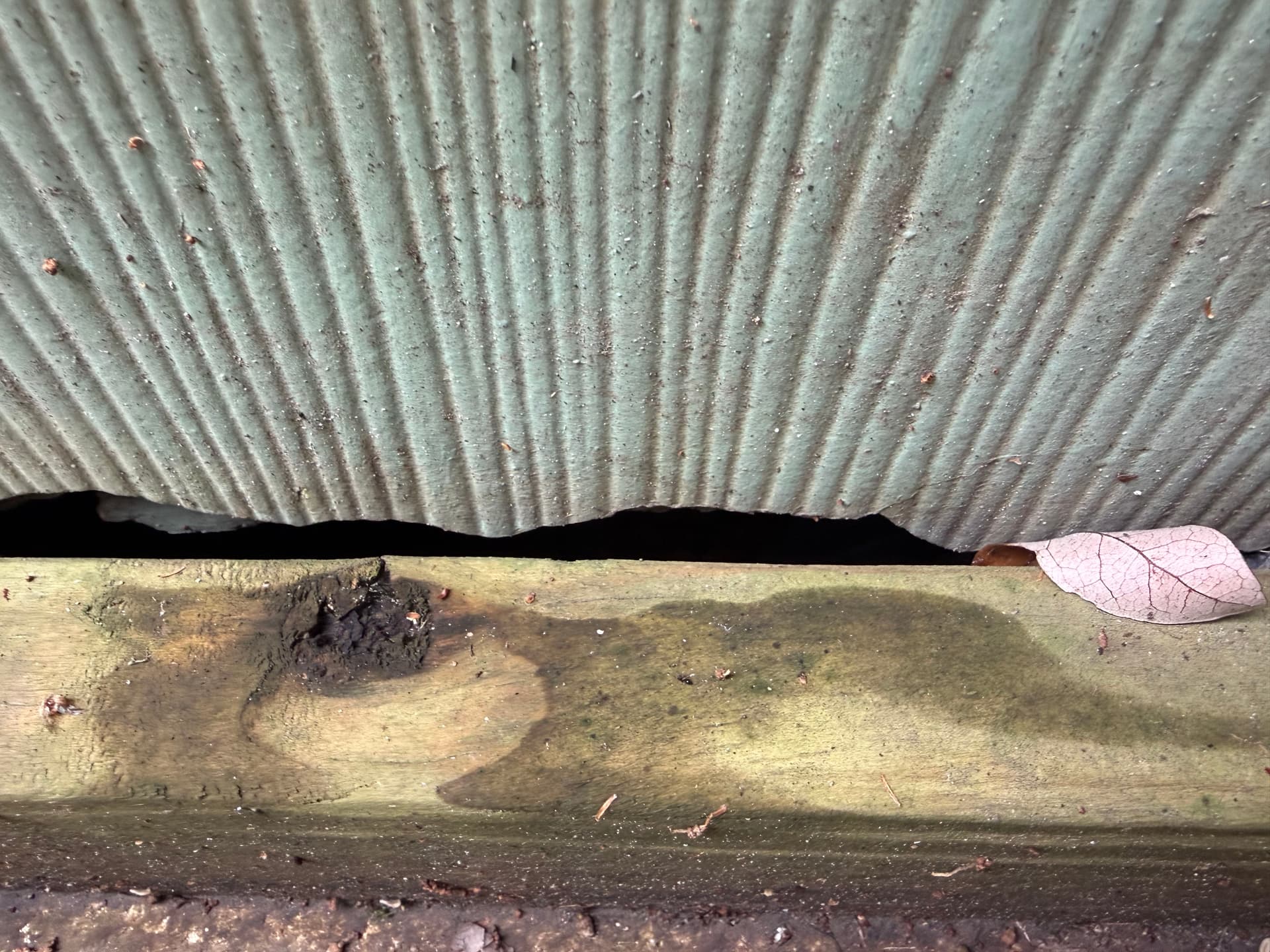
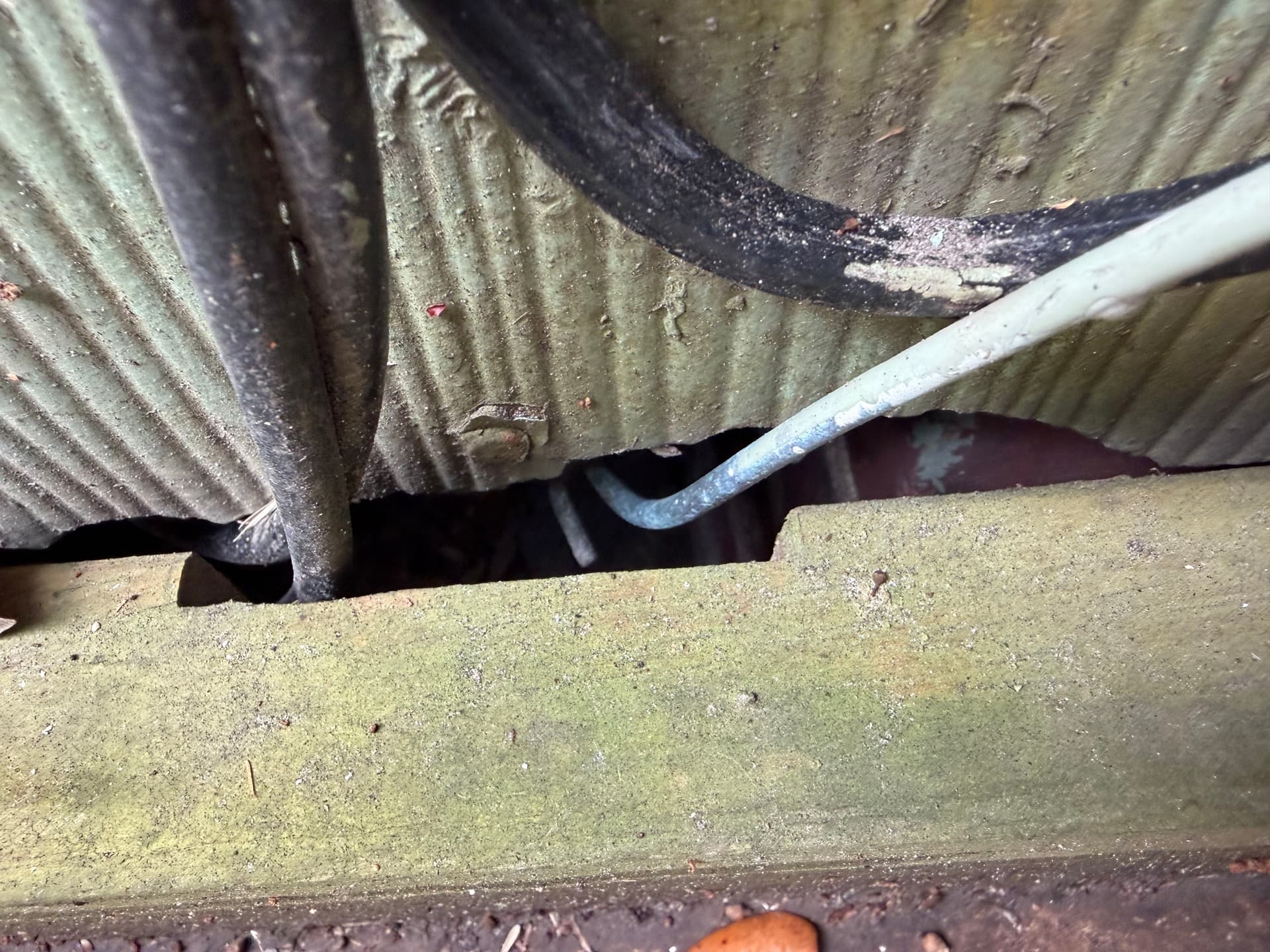
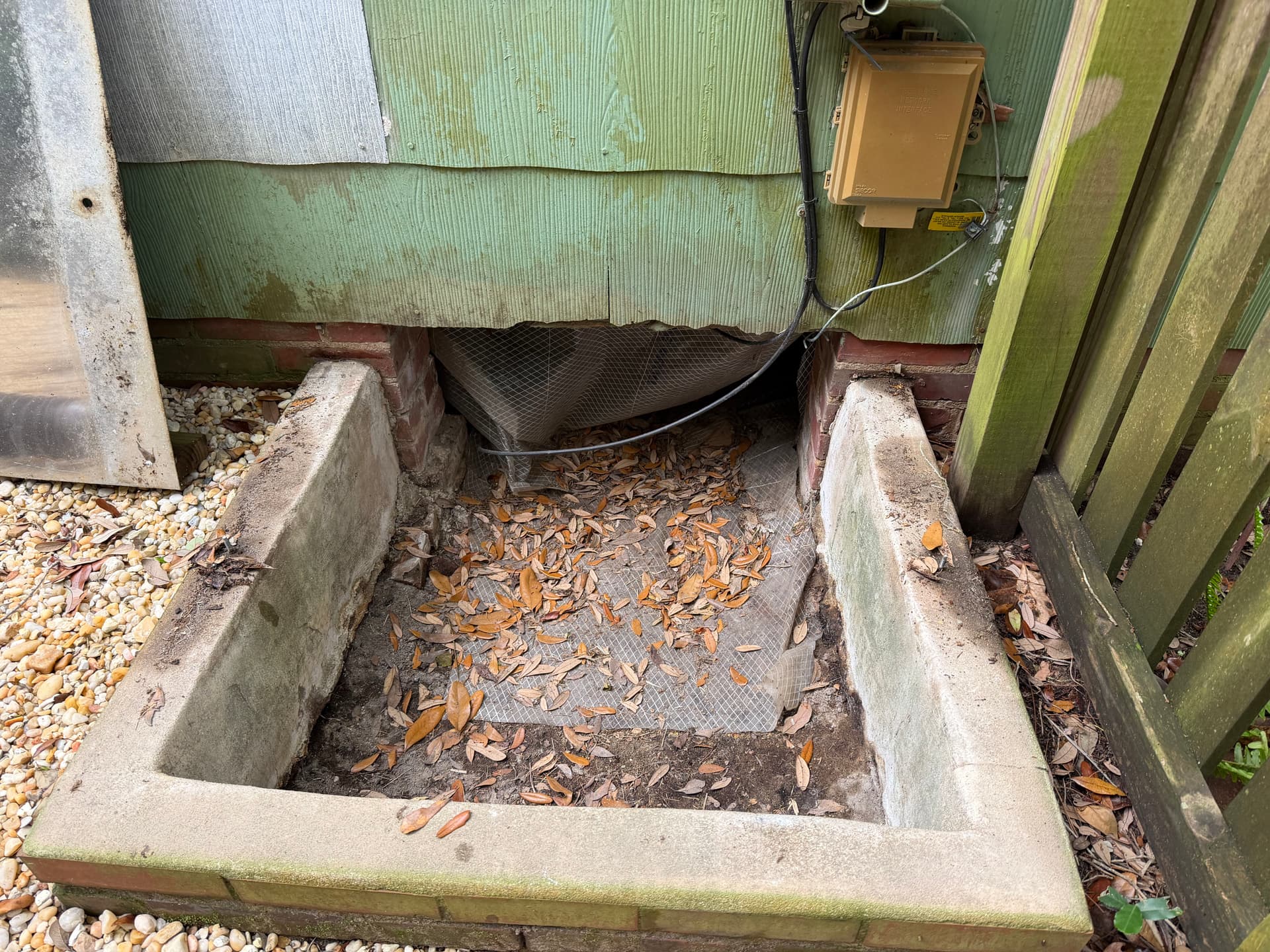
Let's start with the basics. A crawlspace encapsulation is supposed to create a fully sealed environment. No moisture in. No air exchange. Nothing getting past the barrier. What we were looking at here was the complete opposite. The vents were not sealed off. The vapor barrier seams weren't taped - they were held together with weed fabric garden stakes. Water had an open invitation to pour right in, and it did. The crawlspace access point was wide open, completely unsecured, with gaps large enough for water, air, and pests to move through freely.
On top of that, the dehumidifier had been placed right at the entrance - not because that was the right spot, but because whoever installed it said they didn't have enough room to move further in. There was a low spot in the crawlspace just a few feet away that would have been the proper placement. Instead, the unit sat where it was, the condensate pump stopped working correctly, and water started pooling. Standing water in a crawlspace. In a space that was supposedly encapsulated.
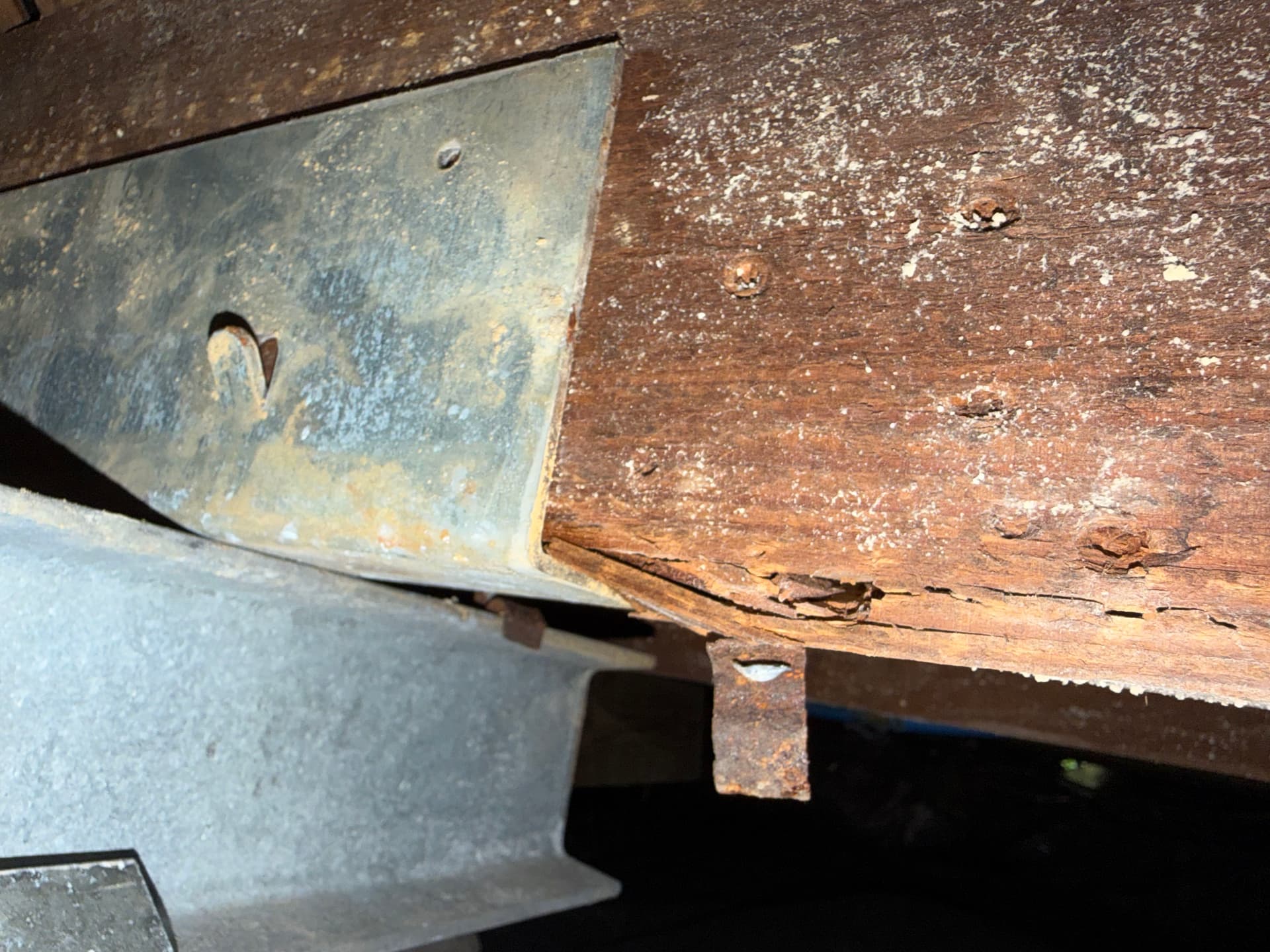
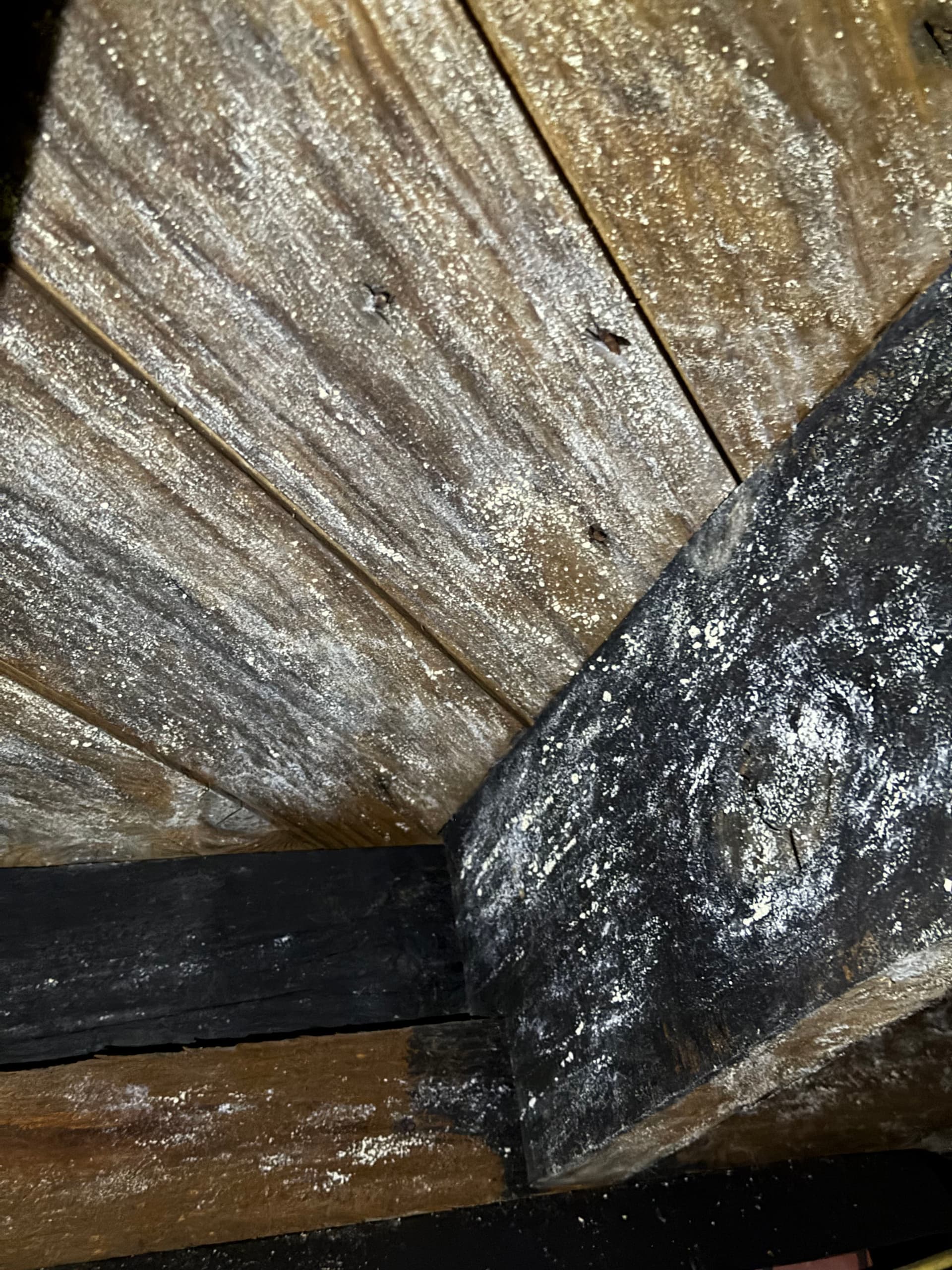
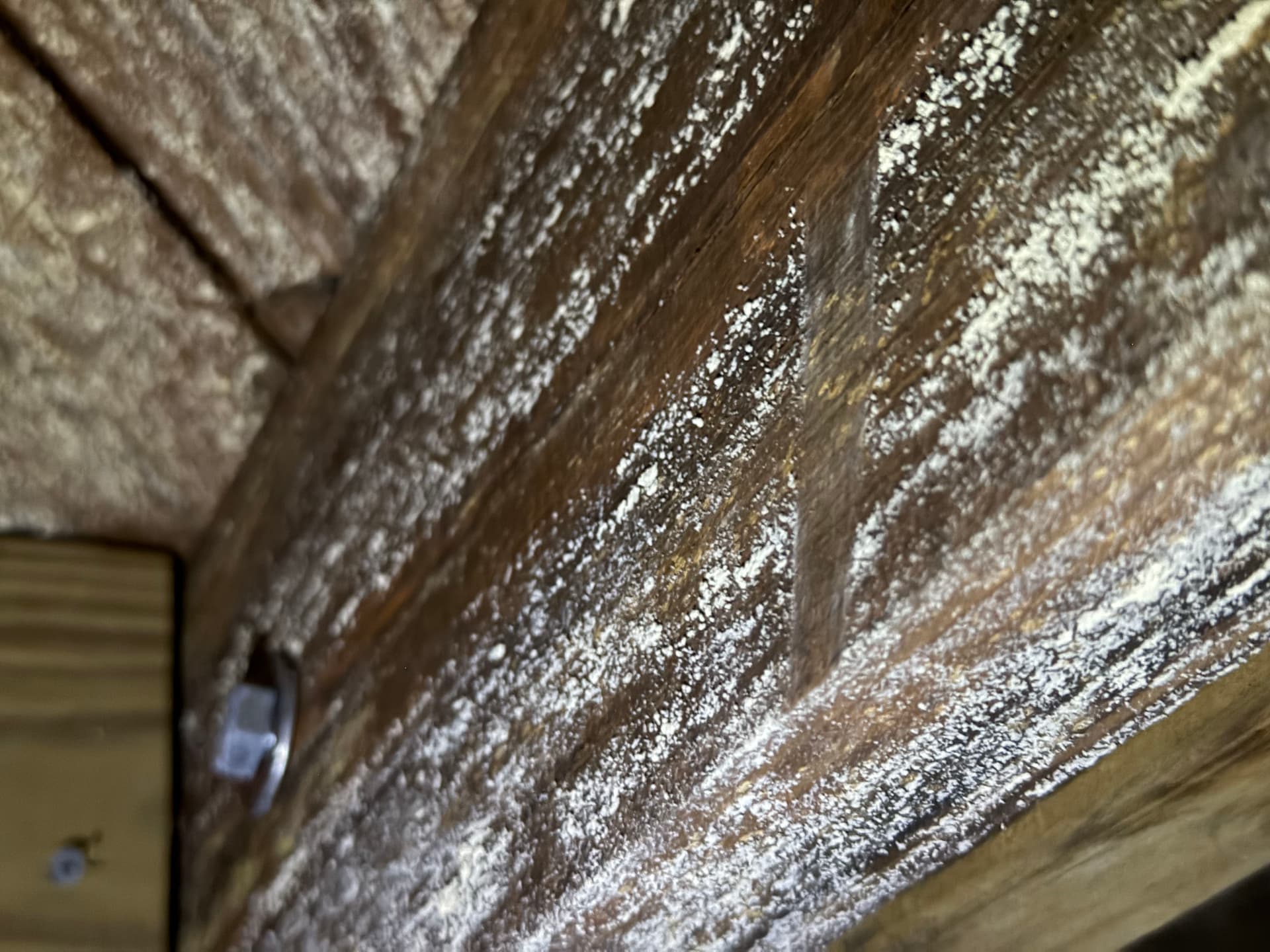
Here's where it gets really bad. All of that uncontrolled moisture led to a massive white rot wood decay fungus outbreak. The underside of this home is now covered in it. You can see it coating the floor joists and subfloor wood - thick, white fungal growth eating away at the structural wood of the home. This kind of fungus doesn't just look bad. It actively breaks down wood fiber, weakening the structural integrity of the entire floor system. Left alone long enough, it becomes a serious structural support issue. The homeowner now has to pay to fix an encapsulation that never worked in the first place AND deal with full fungus removal on top of it.
Crawlspace work requires real knowledge and attention to detail. Every seam needs to be properly taped. Every vent needs to be sealed. Equipment needs to be placed correctly. If any one of those things is skipped or done wrong, moisture wins - and moisture in a crawlspace always causes damage. If you have a crawlspace and you're not 100% sure the work was done right, it's worth having someone who actually knows what they're doing take a look.